In the large family of building and decoration materials, mineral fiber ceiling tile is gradually becoming the favorite of many designers and homeowners due to its unique performance advantages. Whether it is pursuing a peaceful and comfortable home environment or a commercial place with strict requirements for acoustic effects, mineral wool board can demonstrate excellent adaptability and functionality. So, what is the magic of mineral wool board? Let's delve deeper together.
1. Introduction to Mineral Fiber Ceiling Systems
Mineral fiber ceiling tiles represent a sophisticated engineered solution for modern architectural spaces. Composed primarily of inorganic mineral wool (typically derived from volcanic rock or slag) bonded with thermosetting resins, these tiles undergo precision manufacturing to achieve consistent density and performance characteristics. Unlike conventional ceiling materials, mineral fiber tiles offer a unique combination of acoustic control, fire resistance, and design versatility, making them indispensable in commercial and institutional environments where both functionality and aesthetics are paramount.
2.1 Acoustic Optimization
- **Sound, with Noise Reduction Coefficients (NRC) typically ranging 0.5-0.95
- Sound Attenuation: Reduces sound transmission between spaces (STC ratings 35-55)
- Reverberation Control: Critical in open-plan offices where speech intelligibility improves by 40-60%
- Non-combustible (Class A/Class 1 per ASTM E84)
- Zero flame spread with smoke development <50s structural integrity at temperatures exceeding 1,000°C
2.3 Environmental Resilience
- Humidity Resistance: Maintains dimensional stability at 80-95% RH
- Mold Resistance: Inorganic composition prevents biological growth
- Thermal Stability: Coefficient of thermal expansion <0.5mm/m/°C
2.4 Sustainability Features
- Contain 40-80% recycled content
- Fully recyclable at end-of-life
- Contribute to LEED v4.1 credits ( 3. Technical Specifications
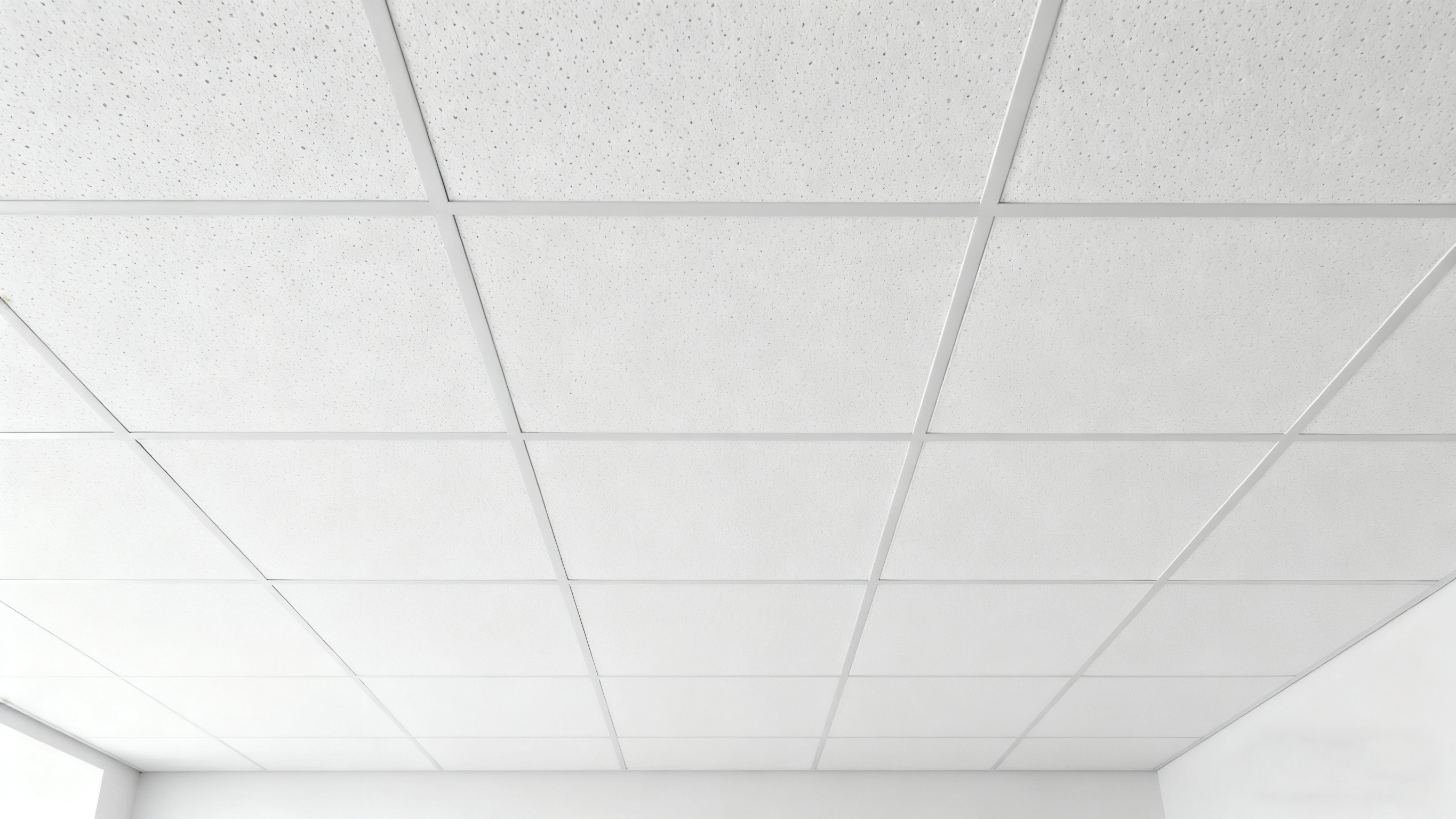
3.1 Dimensional Standards
| Dimension Type | Standard Specifications | Special Applications | |----------------|-------------------------|----------------------| | Length/Width | 600×600mm (dominant global standard)
595×595mm (suspension system fit)
600×1200mm (linear visual effect) | Custom sizes up to 1,800mm for bespoke designs | | Thicknessmm (standard commercial)
20mm (enhanced acoustics)
10mm (retrofit/low-clearance) | 25mm (high-performance studios) |
| Parameter | Industry Standards | Performance Range | |-----------|-------------------|-------------------| | Noise Reduction Coefficient (NRC) | ASTM C423 | 0.55 (standard) to 0.95 (acoustic specialty) | | Fire Rating | ASTM E84 / EN 13501-1 | Class A (non-combustible) | | Moisture Resistance | ASTM D3273 | 80-95% RH tolerance | | Thermal Conductivity | ASTM C518 | 0.035-0.045 W/m·K | | Light Reflectance | ASTM E1477 | 75-90% (high reflectance grades) |
4. Application Scenarios
4.1 Critical Infrastructure
- Healthcare: Surgical suites (humidity control), patient zones (acoustic privacy)
- Education: Lecture halls (NRC≥0.85), laboratories (chemical resistance)
4.2 Commercial Spaces
- Corporate: Open offices (speech privacy systems), boardrooms (luxury finishes)
- Hospitality: Restaurants (grease-resistant coatings), lobbies (custom shapes)
4.3 Technical Environments
- Data centers (plenum-rated thermal insulation)
- Broadcast studios (NRC 0.90+ with bass attenuation)
5. Selection Methodology
5.1 Visual Inspection Protocol
- Surface Analysis: Verify uniform texture under 500 lux lighting
- Edge Inspection: Examine for chipping or fiber separation
- Color Consistency: Compare batch samples under D65 standard light
- Structural Integrity: Perform flex test (max 0.5mm deflection under 1kg load)
- Certification Review: Require current ISO 17025 accredited test reports
- Acoustic Verification: Demand project-specific NRC/STC data
- Environmental Compliance: Validate VOC emissions per CDPH 01350
- Moisture Testing: Request 7-day 95% RH exposure results
5.3 Manufacturer Evaluation
- Production Capabilities: Audit in-line QC systems (SPC implementation)
- Technical Support: Verify BIM/Revit library availability
- Supply Chain Transparency: Request EPDs (Environmental Product Declarations)
5.4 Value Engineering
- Lifecycle Cost Analysis: Calculate 15-year TCO (installation + maintenance)
- Performance/Cost Ratio: Compare $/NRC point and $/dB attenuation
- Warranty Assessment: Evaluate coverage for sag resistance (≤1mm/3m)
6. Installation & Maintenance
6.1 Advanced Installation Techniques
- Seismic Compliance: Follow ASTM C635 for zone 4 seismic requirements
- Plenum Integration: Coordinate with M per NFPA 90A
- Acoustic Sealing: Apply non-hardening mastic for STC improvement
6.2 Maintenance Protocols
| Maintenance Type | Procedure | Frequency | |------------------|-----------|-----------| | ** | HEPA-filtered vacuuming | Quarterly | | Deep Cleaning | Low-pressure steam (<50psi) | Biennial | | Moisture Inspection | Thermal imaging survey | Annual deflection measurement | 5-year |
TKD Information
-
Title: Mineral Fiber Ceiling Solutions: Technical Specifications & Selection Guide
-
Keywords:
-
High-performance mineral wool boards
-
Acoustic ceiling tile specifications
-
Fire-rated ceiling systems
-
Commercial ceiling installation standards
-
Sustainable ceiling materials
-
Description: Comprehensive technical guide to mineral fiber ceiling tiles covering acoustic performance metrics, fire safety ratings, moisture-resistant applications, and selection methodology for commercial projects. Includes/EN compliance data and maintenance protocols.


