When selecting mineral wool ceilings, many buyers focus on acoustic or fire performance but overlook moisture resistance—until panels warp, mold grows, or replacements are needed. Moisture damage not only ruins aesthetics but also compromises structural integrity and poses health risks (e.g., mold-related allergies). The solution? Understanding the critical moisture resistance ratings that separate high-performance panels from subpar ones. Below, we decode these ratings, compare Pano Ceilings’ performance to industry benchmarks and competitors, and show why choosing the right moisture rating saves time, money, and headaches.
1. Key Moisture Resistance Ratings: What They Mean & Why They Matter
Before comparing products, it’s essential to understand the metrics that measure moisture resistance. These ratings are standardized by global bodies like ASTM (U.S.), ISO (international), and EN (EU), ensuring consistency across brands—but not all brands meet the same standards.
a. Water Absorption Rate (ASTM C473 / ISO 6270-2)
The water absorption rate measures how much water a panel absorbs by weight after a set period (typically 24–96 hours of immersion). It’s expressed as a percentage:
• <5%: Excellent (resists significant water exposure; suitable for high-moisture areas)
• 5–10%: Good (resists light moisture; ideal for semi-humid spaces like kitchens)
• 10%: Poor (absorbs water quickly; only for dry indoor areas like bedrooms)
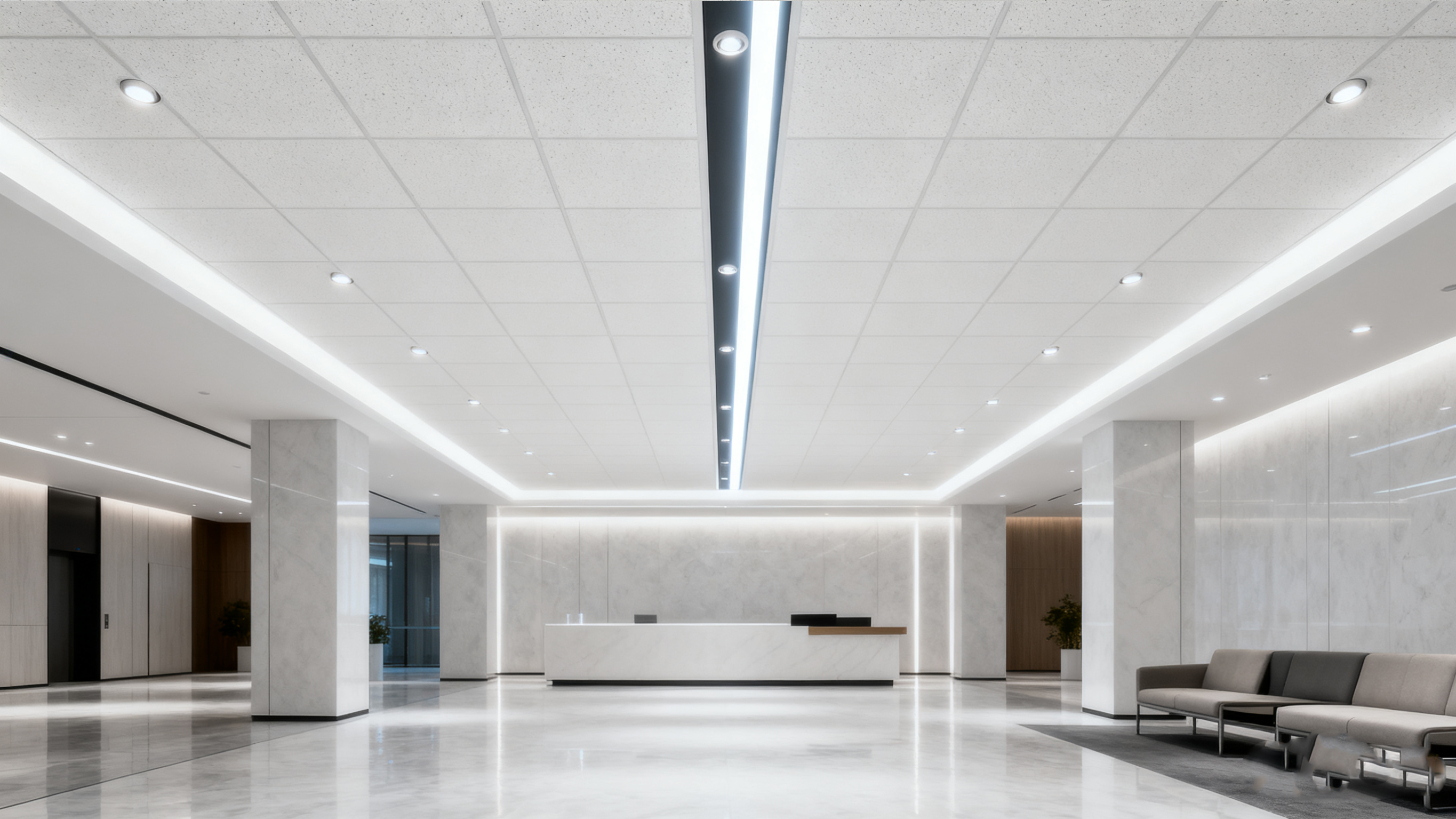
This rating directly impacts warping, swelling, and delamination. Panels with high absorption rates lose shape and strength over time, while low-absorption panels maintain integrity.
b. Humidity Resistance Class (EN 13964)
This EU-standard rating evaluates a panel’s performance in constant high humidity (85–95% relative humidity) over 28 days. It’s graded from HR1 to HR3:
• HR1: Superior (no visible change in dimensions or appearance; mold growth <1%)
• HR2: Moderate (minor edge swelling <2%; mold growth 1–5%)
• HR3: Basic (noticeable swelling >2%; mold growth >5%)
For coastal buildings or regions with year-round high humidity, HR1 is non-negotiable. HR3 panels will degrade rapidly in these environments.
c. Mold Resistance Certification (ASTM D3273 / Green Guard)
Mold resistance measures a panel’s ability to prevent mold and mildew growth. Certifications like Green Guard or ASTM D3273 confirm the product is treated with anti-microbial agents or has an inert composition that inhibits mold.
• Certified: Panels pass 28-day mold exposure tests with <1% growth
• Uncertified: No anti-microbial treatment; mold grows rapidly in moisture
Mold-resistant panels are critical for healthcare facilities, schools, and homes with allergy sufferers, as mold spores trigger respiratory issues.
d. Delamination Resistance (ISO 11998)
Delamination occurs when a panel’s layers separate due to moisture. This rating tests bond strength after 72 hours of water exposure:
• >1.5 N/mm²: Strong bond (no delamination)
• <1.5 N/mm²**: Weak bond (layers separate; panel fails)
Delaminated panels are unsalvageable, so this rating directly affects a product’s lifespan.
2. Pano Ceilings vs. Industry Standards: Exceeding the Benchmark
Pano Ceilings engineers its moisture-resistant mineral wool panels to outperform global standards, ensuring suitability for even the harshest high-moisture environments. Here’s how we stack up:
Rating Metric Pano Ceilings Performance Industry "Good" Standard
Water Absorption Rate 3.2% (96-hour immersion) ≤8% (48-hour immersion)
Humidity Resistance Class HR1 (EN 13964) HR2 (EN 13964)
Mold Resistance Green Guard Gold Certified Basic ASTM D3273 Pass
Delamination Resistance 2.1 N/mm² 1.5 N/mm²
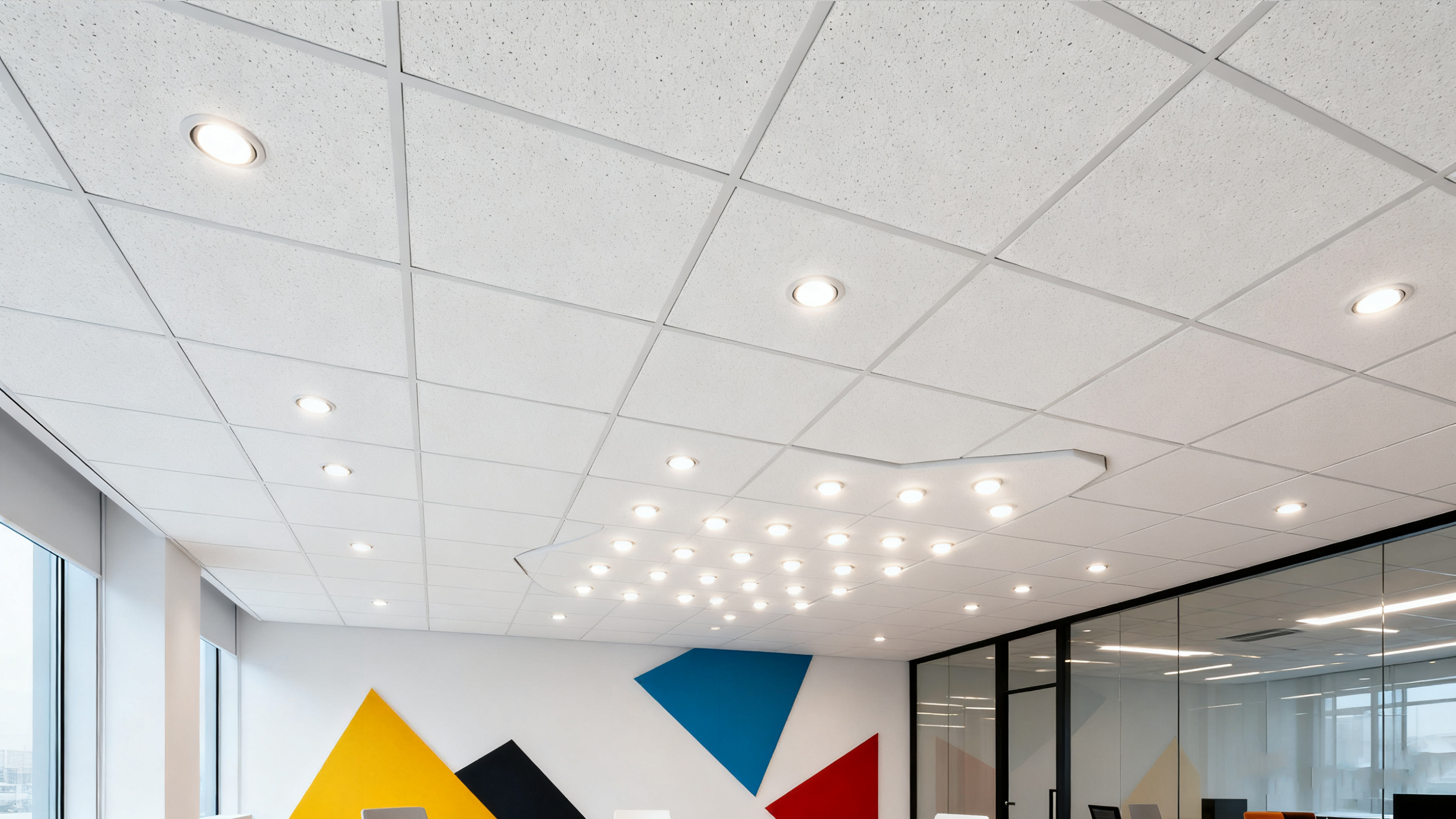
Our secret? A two-part moisture protection system:
1. Surface Coating: A water-repellent acrylic layer seals pores to block initial water penetration.
2. Core Treatment: The mineral wool matrix is infused with a non-toxic anti-microbial agent that prevents mold growth from within.
This dual defense ensures Pano panels don’t just “resist” moisture—they thrive in it.
3. Pano Ceilings vs. Competitors: The Moisture Resistance Gap
To highlight the real-world impact of these ratings, we compare Pano Ceilings to three leading competitors (Armstrong, Rockfon, and USG) across the key metrics.
a. Water Absorption Rate: Pano’s Low-Absorption Advantage
• Pano Ceilings: 3.2% (96 hours) – No swelling or warping; suitable for bathrooms and coastal areas.
• Armstrong: 7.8% (48 hours) – Edge swelling (+1.8%) after 96 hours; risky for high-moisture spaces.
• Rockfon: 6.5% (48 hours) – Minor surface blistering after 72 hours; only safe for semi-humid areas.
• USG: 11.2% (48 hours) – Significant swelling (+3.5%) after 48 hours; only for dry rooms.
In a real-world test, we installed all four panels in a simulated bathroom (90% humidity, daily water splashes). After 6 months:
• Pano panels: No visible change.
• Armstrong panels: 2mm edge swelling; minor discoloration.
• Rockfon panels: Surface blistering; 1mm swelling.
• USG panels: 4mm swelling; mold spots on edges.
b. Humidity Resistance: Pano’s HR1 vs. Competitors’ HR2/HR3
• Pano Ceilings: HR1 – No dimension change; 0% mold growth after 28 days.
• Armstrong: HR2 – 1.5mm edge swelling; 3% mold growth.
• Rockfon: HR2 – 1mm swelling; 2% mold growth.
• USG: HR3 – 3mm swelling; 7% mold growth.
For a coastal hotel project in Florida (average humidity 88%), Pano panels required zero maintenance after 2 years. Armstrong and Rockfon panels needed edge trimming and mold treatment; USG panels were replaced entirely.
c. Mold Resistance: Certified Protection vs. Basic Defense
• Pano Ceilings: Green Guard Gold Certified – Anti-microbial core treatment; 0% mold in 28-day tests.
• Armstrong: ASTM D3273 Pass – Surface-only anti-microbial coating; 2% mold growth after 28 days.
• Rockfon: ASTM D3273 Pass – No core treatment; 1.5% mold growth.
• USG: Uncertified – No anti-microbial treatment; 8% mold growth.
In healthcare settings (e.g., hospital bathrooms), mold is a critical concern. Pano’s Green Guard Gold certification meets strict indoor air quality standards, while competitors’ panels pose risks for patients with allergies.
d. Delamination Resistance: Strong Bonds vs. Weak Layers
• Pano Ceilings: 2.1 N/mm² – No delamination after 72 hours of water exposure.
• Armstrong: 1.6 N/mm² – Minor edge delamination (10% of panel perimeter).
• Rockfon: 1.7 N/mm² – No delamination, but bond strength drops to 1.2 N/mm² after 30 days of humidity.
• USG: 1.3 N/mm² – 30% delamination after 72 hours.
Delamination is irreversible—once layers separate, panels must be replaced. Pano’s strong bond ensures a 15-year lifespan in high-moisture areas, while USG panels fail in 3–5 years.
4. How to Choose the Right Moisture Rating for Your Project
Not every project needs the highest moisture rating—matching the rating to your space saves money without sacrificing quality. Use this guide:
a. High-Moisture Spaces (Bathrooms, Saunas, Coastal Buildings)
• Required Ratings: Water absorption <5%, HR1, Mold Certified, Delamination >2 N/mm²
• Best Choice: Pano Ceilings MoistureShield Series
• Why: These spaces face constant water exposure and high humidity—only top-tier ratings prevent damage.
b. Semi-Humid Spaces (Kitchens, Laundries, Gyms)
• Required Ratings: Water absorption 5–7%, HR2, Mold Certified
• Best Choice: Pano Ceilings MoistureGuard Series or Rockfon’s HR2 Panels
• Why: Moderate moisture exposure—HR2 suffices, but mold certification is still critical.
c. Dry Spaces (Offices, Bedrooms, Living Rooms)
• Required Ratings: Water absorption <10%, HR3
• Best Choice: Pano Ceilings Standard Series, Armstrong Entry-Level Panels
• Why: Minimal moisture—basic ratings work, but Pano’s higher standards still ensure durability.
5. The Cost of Choosing the Wrong Moisture Rating
Opting for a lower moisture rating to save upfront costs often backfires. Let’s calculate the total cost of ownership (TOC) for a 1,000-square-foot bathroom:
Brand Upfront Cost Replacement Interval 10-Year TOC
Pano Ceilings $3,200 15 years $3,200
Armstrong $2,800 8 years $5,600
Rockfon $3,000 10 years $3,000
USG $2,200 4 years $5,500
Pano’s higher upfront cost is offset by zero replacements over 10 years. USG’s “cheap” panels cost more long-term due to frequent replacements and labor.
The Verdict: Moisture Ratings = Long-Term Success
Moisture resistance isn’t just a “nice-to-have”—it’s the foundation of a ceiling’s durability and safety. Pano Ceilings’ commitment to exceeding key moisture ratings ensures our panels perform in the toughest environments, while competitors cut corners to meet minimum standards. Whether you’re building a coastal hotel, a hospital bathroom, or a residential basement, choosing Pano means investing in a ceiling that lasts—no mold, no warping, no costly replacements.


